EXHIBITION PROJECT
The exhibition ZMIANY presents works by an emerging generation of authors from the Faculty of Multimedia Communications at Tomáš Baťa University in Zlín. The project arose as a shared reflection on transformation not as a one-off theme, but as a condition in which design naturally finds itself today. ZMIANY focuses on process, movement, and openness rather than definitive forms and closed meanings.
The curatorial concept is based on the belief that contemporary design unfolds in constant tension between the physical and digital worlds. Digital tools, virtual environments, and augmented reality are not merely instruments here, but active co-creators of the resulting works. The exhibition traces transformation on three interconnected levels: methodological, material, and conceptual. It shows how working methods, relationships to material, and the very understanding of design’s role are changing.
The presented works oscillate between fascination with technological development and its critical reflection. The authors engage with questions of responsibility, sustainability, and the ethical boundaries of innovation. Design is not presented as a service or decoration, but as a tool for thinking and a means of articulating attitudes toward the contemporary world.
ZMIANY does not view change as a problem to be solved, but as a condition to work with.
The exhibition opens space for dialogue between technology and craft, between experiment and experience, between the present and possible future scenarios.
Collection
FERRISTA
Martina Hrnčiříková
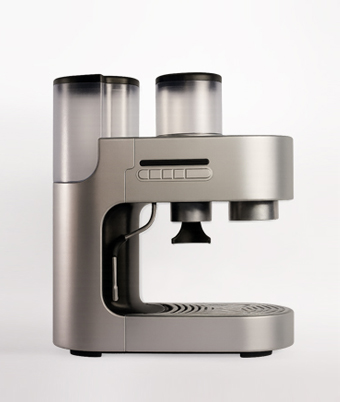
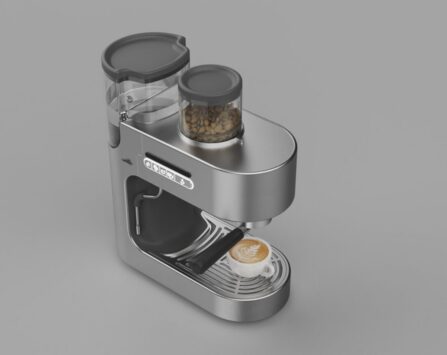
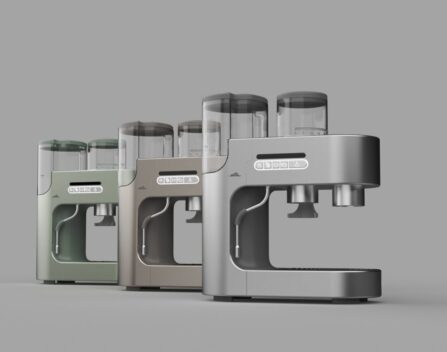
Ferrista revisits the lever espresso machine as a domestic ritual, slow, physical, and deliberately hands-on, yet recalibrated for contemporary living. Its compact, horizontally composed body compresses the familiar machinery into a calmer presence, even tucking away secondary elements such as the steam wand to keep the everyday gesture uncluttered. Shaped through research, observation, and iteration, the object balances ergonomics, restraint, and a sustainable mindset while refusing the usual appliance noise. Within ZMIANY, Ferrista frames change as a redesign of habit: tradition preserved, but reorganized, so the ritual fits new spaces, new tempos, and new expectations.
FERRISTA
Martina Hrnčiříková
Ferrista revisits the lever espresso machine as a domestic ritual, slow, physical, and deliberately hands-on, yet recalibrated for contemporary living. Its compact, horizontally composed body compresses the familiar machinery into a calmer presence, even tucking away secondary elements such as the steam wand to keep the everyday gesture uncluttered. Shaped through research, observation, and iteration, the object balances ergonomics, restraint, and a sustainable mindset while refusing the usual appliance noise. Within ZMIANY, Ferrista frames change as a redesign of habit: tradition preserved, but reorganized, so the ritual fits new spaces, new tempos, and new expectations.
SCORIA
Adam Keprta
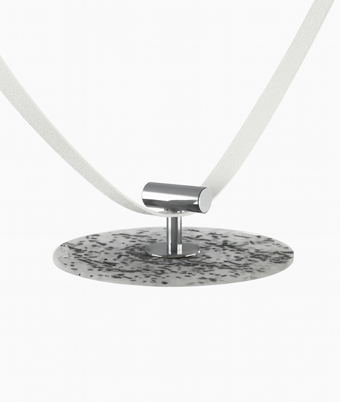
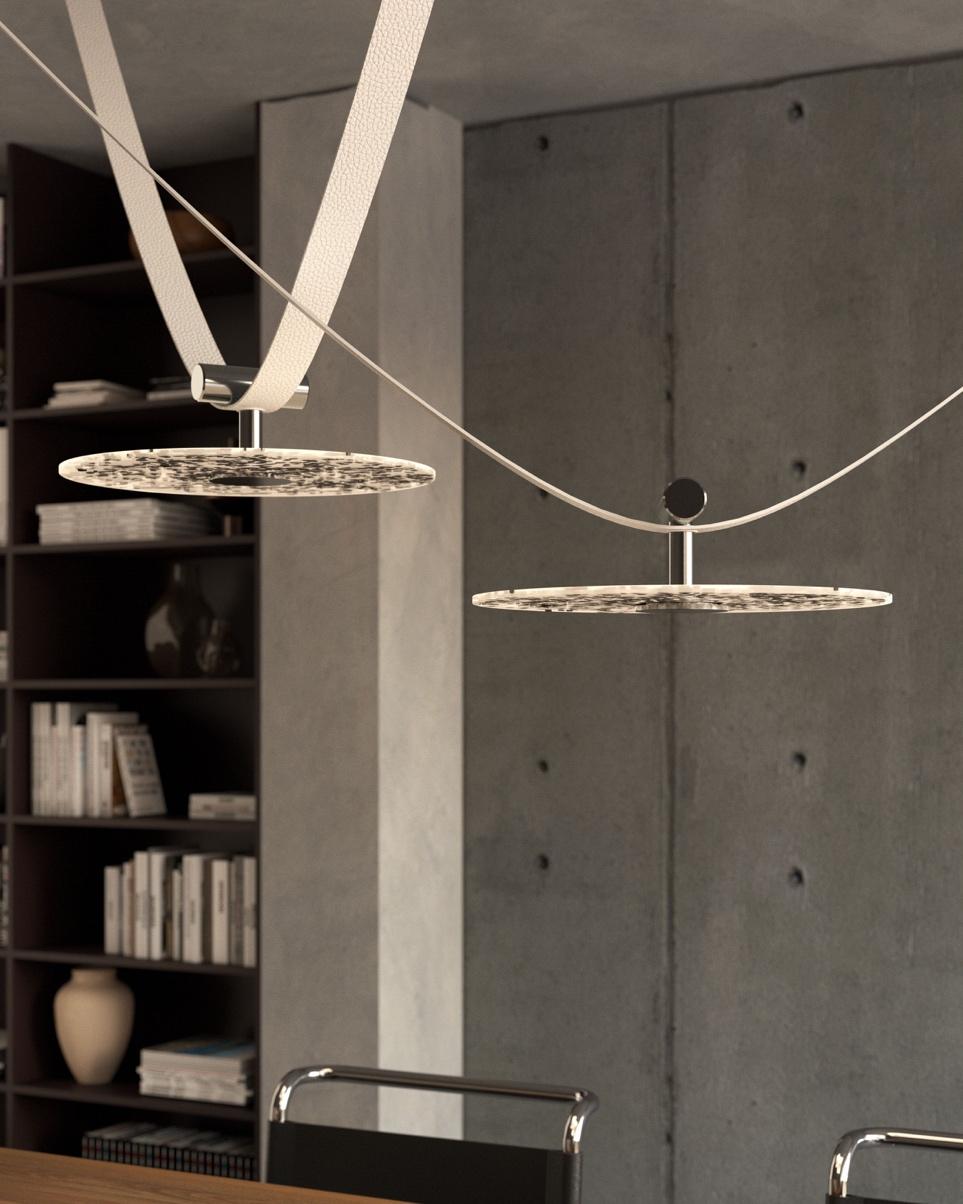
SCORIA approaches sustainability not as a label, but as a material narrative. The diffuser made from recycled plastic carries a layered surface that recalls stone deposits: a visual record of transformation. Its form remains deliberately disciplined, allowing the material to speak without spectacle. Recycled aluminium provides a light, stable structure; leather straps soften the technical character and turn suspension into an intimate contact point. In the frame of ZMIANY, the work proposes change as a shift in hierarchy: what was once “waste” becomes the protagonist, and the object turns recycling into an aesthetic, emotional, and ethical proposition.
SCORIA
Adam Keprta
SCORIA approaches sustainability not as a label, but as a material narrative. The diffuser made from recycled plastic carries a layered surface that recalls stone deposits: a visual record of transformation. Its form remains deliberately disciplined, allowing the material to speak without spectacle. Recycled aluminium provides a light, stable structure; leather straps soften the technical character and turn suspension into an intimate contact point. In the frame of ZMIANY, the work proposes change as a shift in hierarchy: what was once “waste” becomes the protagonist, and the object turns recycling into an aesthetic, emotional, and ethical proposition.
SYMETRA
Jiří Šprtel
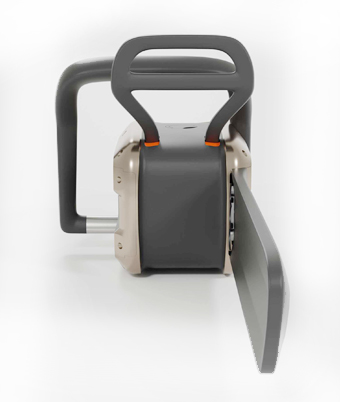
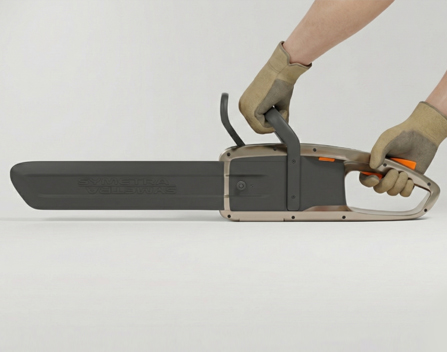
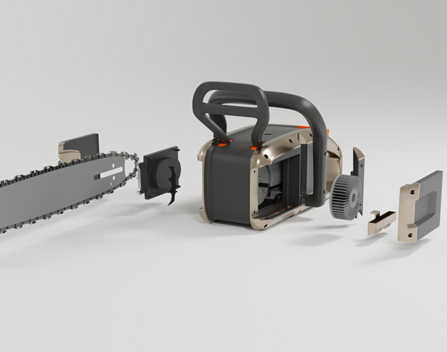
Symetra is a cordless chainsaw designed around symmetry and universal use for both right and left-handed operators. Its functional layout enables an easy change of grip and control without structural redesign or producing two separate versions. Mirrored ergonomic and control elements are positioned to support safe, efficient handling from either side. Within ZMIANY, the project frames change as ergonomic innovation: a tool that adapts to different bodies and habits, shifting “the standard user” into a more inclusive norm.
SYMETRA
Jiří Šprtel
Symetra is a cordless chainsaw designed around symmetry and universal use for both right and left-handed operators. Its functional layout enables an easy change of grip and control without structural redesign or producing two separate versions. Mirrored ergonomic and control elements are positioned to support safe, efficient handling from either side. Within ZMIANY, the project frames change as ergonomic innovation: a tool that adapts to different bodies and habits, shifting “the standard user” into a more inclusive norm.
Sinae
Valeryia Truskavetská
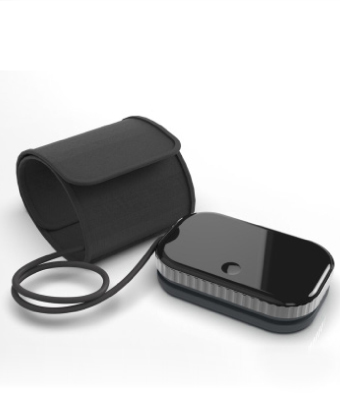
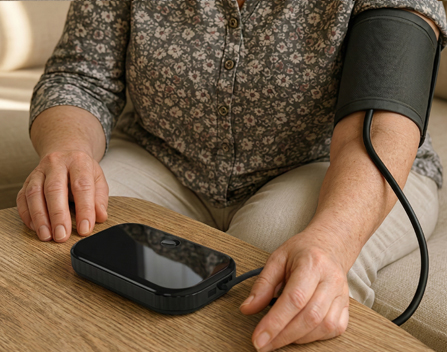
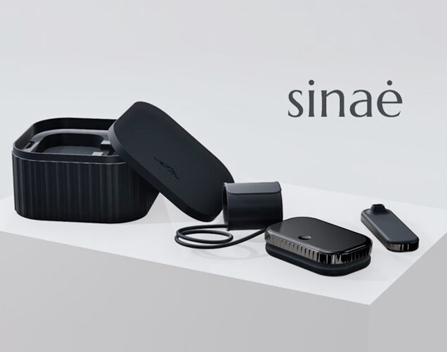
Sinaë is a compact home-healthcare set designed to monitor key vital signs — blood pressure, temperature, and blood oxygen levels.
Developed in collaboration with ETA, the system prioritizes ergonomic handling, intuitive use, and a coherent visual language suited to everyday domestic life. The result is a product family that balances aesthetic calm with technical clarity, making routine self-checks feel straightforward rather than clinical. Within the frame of ZMIANY, the project reads change as a shift in care culture: medical devices move away from sterile, purely technical objects toward empathetic tools that people can understand, trust, and live with. At the same time, Sinaë asks how home healthcare will transform as digital systems expand and societies age — and what responsibilities design will carry in shaping that future.
Sinae
Valeryia Truskavetská
Sinaë is a compact home-healthcare set designed to monitor key vital signs — blood pressure, temperature, and blood oxygen levels.
Developed in collaboration with ETA, the system prioritizes ergonomic handling, intuitive use, and a coherent visual language suited to everyday domestic life. The result is a product family that balances aesthetic calm with technical clarity, making routine self-checks feel straightforward rather than clinical. Within the frame of ZMIANY, the project reads change as a shift in care culture: medical devices move away from sterile, purely technical objects toward empathetic tools that people can understand, trust, and live with. At the same time, Sinaë asks how home healthcare will transform as digital systems expand and societies age — and what responsibilities design will carry in shaping that future.

Foculo
Jan Kroulík
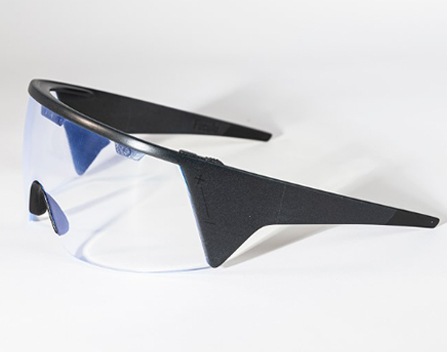
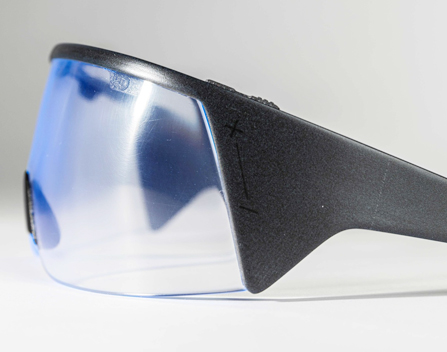
Foculo is a concept for augmented-reality glasses designed to support concentration, productivity, and single-tasking. At its core is a variable field-of-view system that can actively limit visually distracting elements in the user’s immediate workspace, turning attention into something the product can shape rather than merely measure. The device also helps regulate work intervals, reduce fatigue during extended tasks, and later evaluate patterns of efficiency and distraction.
The design brings together ergonomics, contemporary technology, and functional clarity. The system is based on electrochromic dimming, eye-tracking, and AR features that can display content while managing the visual environment. Within ZMIANY, Foculo frames change as an attention shift: from passive exposure to constant stimuli toward a deliberately edited reality—where technology becomes a tool for reclaiming focus in a world that competes for it.
Foculo
Jan Kroulík
Foculo is a concept for augmented-reality glasses designed to support concentration, productivity, and single-tasking. At its core is a variable field-of-view system that can actively limit visually distracting elements in the user’s immediate workspace, turning attention into something the product can shape rather than merely measure. The device also helps regulate work intervals, reduce fatigue during extended tasks, and later evaluate patterns of efficiency and distraction.
The design brings together ergonomics, contemporary technology, and functional clarity. The system is based on electrochromic dimming, eye-tracking, and AR features that can display content while managing the visual environment. Within ZMIANY, Foculo frames change as an attention shift: from passive exposure to constant stimuli toward a deliberately edited reality—where technology becomes a tool for reclaiming focus in a world that competes for it.
Neuma
Marek Ondřej
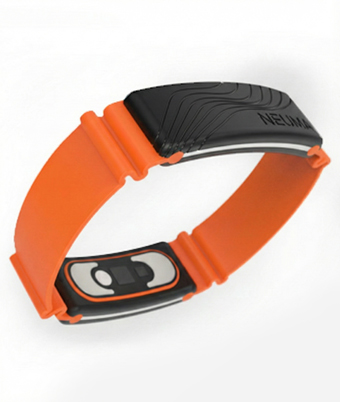
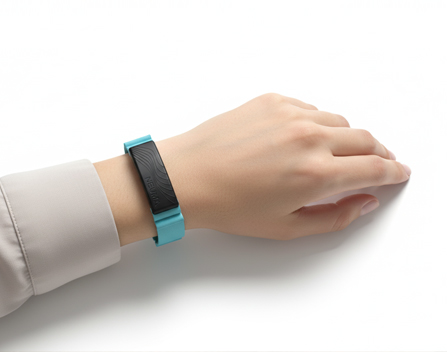
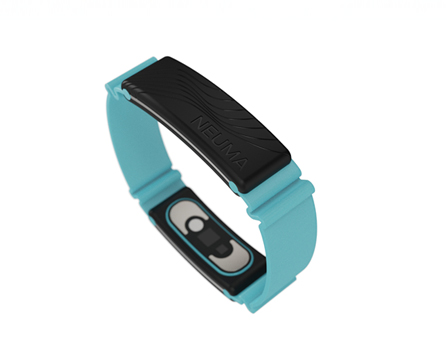
NEUMA is a minimalist, screenless bracelet designed for early detection and gentle mitigation of stress and panic episodes. It combines PPG/HRV, EDA, and skin-temperature sensing to read subtle changes in the body; when tension rises, it responds discreetly with a vibration (or a soft light cue) and guides the wearer into calming, paced breathing. A companion app logs episodes and allows notes about context—turning momentary sensations into patterns that can be understood over time.
Prepared for NFC functions and charged via a magnetic puck with pogo pins, NEUMA is built as two compact modules that stay precise, unobtrusive, and comfortable for all-day wear. Within ZMIANY, NEUMA frames change as an internal shift: technology that doesn’t demand attention, but quietly helps transform an escalating moment into a manageable rhythm—and converts invisible states into actionable awareness.
Neuma
Marek Ondřej
NEUMA is a minimalist, screenless bracelet designed for early detection and gentle mitigation of stress and panic episodes. It combines PPG/HRV, EDA, and skin-temperature sensing to read subtle changes in the body; when tension rises, it responds discreetly with a vibration (or a soft light cue) and guides the wearer into calming, paced breathing. A companion app logs episodes and allows notes about context—turning momentary sensations into patterns that can be understood over time.
Prepared for NFC functions and charged via a magnetic puck with pogo pins, NEUMA is built as two compact modules that stay precise, unobtrusive, and comfortable for all-day wear. Within ZMIANY, NEUMA frames change as an internal shift: technology that doesn’t demand attention, but quietly helps transform an escalating moment into a manageable rhythm—and converts invisible states into actionable awareness.

Rings of Assistance
Vladimír Vykoukal
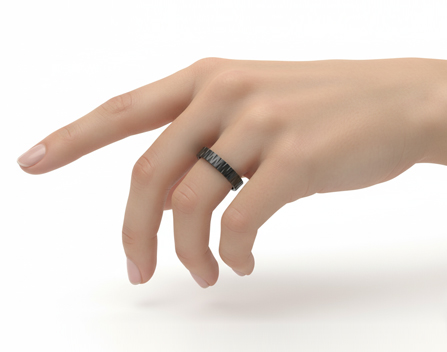
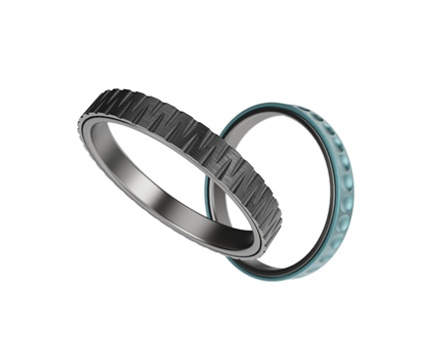
Rings of Assistance is a therapeutic–educational tool designed for children and adults with ADHD, created to support mental wellbeing, strengthen concentration, and offer a meaningful activity for the hands. Through carefully selected materials and tactile qualities, the rings encourage fine motor development while providing a safe channel for self-regulation and emotional expression. They also function as a learning aid—inviting users to explore forms, textures, and material differences through touch.
By stimulating tactile perception and supporting sensory integration, the rings become a practical component of therapeutic and educational settings, where focus is not demanded but gradually built through interaction. Within ZMIANY, the project frames change as embodied learning: attention is shaped through material experience, and simple hand-driven actions become a pathway from restlessness toward steadier presence.
Rings of Assistance
Vladimír Vykoukal
Rings of Assistance is a therapeutic–educational tool designed for children and adults with ADHD, created to support mental wellbeing, strengthen concentration, and offer a meaningful activity for the hands. Through carefully selected materials and tactile qualities, the rings encourage fine motor development while providing a safe channel for self-regulation and emotional expression. They also function as a learning aid—inviting users to explore forms, textures, and material differences through touch.
By stimulating tactile perception and supporting sensory integration, the rings become a practical component of therapeutic and educational settings, where focus is not demanded but gradually built through interaction. Within ZMIANY, the project frames change as embodied learning: attention is shaped through material experience, and simple hand-driven actions become a pathway from restlessness toward steadier presence.
Timer X1
Bára Kolondrová
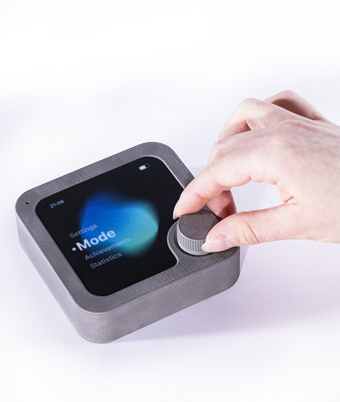
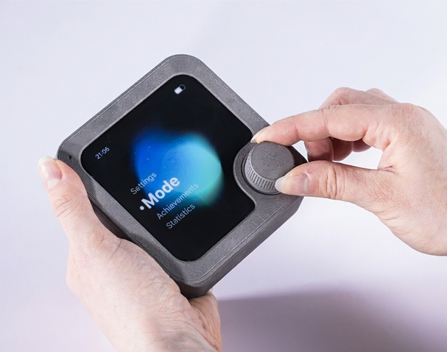
Timer X1 is an elegant, intuitive timer designed to support deep work and a more deliberate use of time. It offers four dynamic modes — Basic, Pomodoro, Sprint, and Zen — adapting to different rhythms and work habits rather than forcing a single routine. With simple one-button control, users can switch modes, start countdowns, and stay in a flow state without the friction and distraction of complex interfaces.
Visual feedback and small motivational rewards reinforce consistency, helping focus become a practiced habit instead of a constant struggle. Within ZMIANY, Timer X1 frames change as a shift in tempo: from scattered attention to structured presence, where time is not chased but consciously shaped into intervals that make concentration possible.
Timer X1
Bára Kolondrová
Timer X1 is an elegant, intuitive timer designed to support deep work and a more deliberate use of time. It offers four dynamic modes — Basic, Pomodoro, Sprint, and Zen — adapting to different rhythms and work habits rather than forcing a single routine. With simple one-button control, users can switch modes, start countdowns, and stay in a flow state without the friction and distraction of complex interfaces.
Visual feedback and small motivational rewards reinforce consistency, helping focus become a practiced habit instead of a constant struggle. Within ZMIANY, Timer X1 frames change as a shift in tempo: from scattered attention to structured presence, where time is not chased but consciously shaped into intervals that make concentration possible.
Katzegotchi
Štěpán Dlabaja
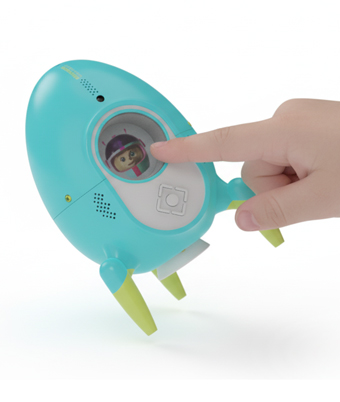
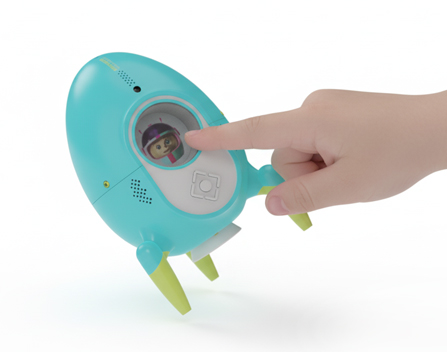
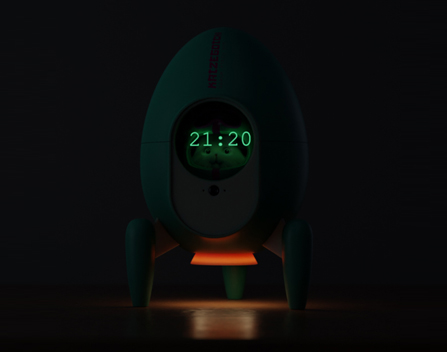
Katzegotchi is an interactive game concept inspired by the iconic Tamagotchi, reimagined for the present through artificial intelligence. Using generative AI, it creates a singular digital pet identity that adapts to each user and evolves through ongoing interaction.
Its minimalist rocket-shaped form adds a symbolic, sculptural presence—bringing haptic qualities back into a type of play that is otherwise drifting toward the purely screen-based.
The project transforms gaming from a simple simulation into a personalized dialogue between human and machine, where the “character” is not fixed but continuously authored through use. Within ZMIANY, Katzegotchi frames change as a shift in intimacy: AI-driven play becomes more personal, while the physical object reclaims touch and presence as entertainment moves deeper into the virtual.
Katzegotchi
Štěpán Dlabaja
Katzegotchi is an interactive game concept inspired by the iconic Tamagotchi, reimagined for the present through artificial intelligence. Using generative AI, it creates a singular digital pet identity that adapts to each user and evolves through ongoing interaction.
Its minimalist rocket-shaped form adds a symbolic, sculptural presence—bringing haptic qualities back into a type of play that is otherwise drifting toward the purely screen-based.
The project transforms gaming from a simple simulation into a personalized dialogue between human and machine, where the “character” is not fixed but continuously authored through use. Within ZMIANY, Katzegotchi frames change as a shift in intimacy: AI-driven play becomes more personal, while the physical object reclaims touch and presence as entertainment moves deeper into the virtual.
Glowify
Adéla Jakubeková
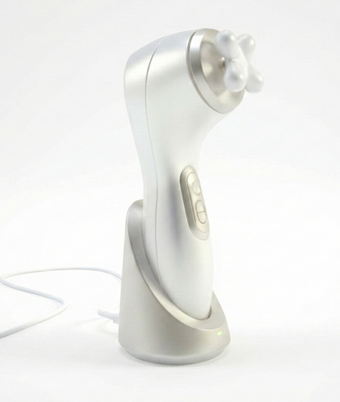
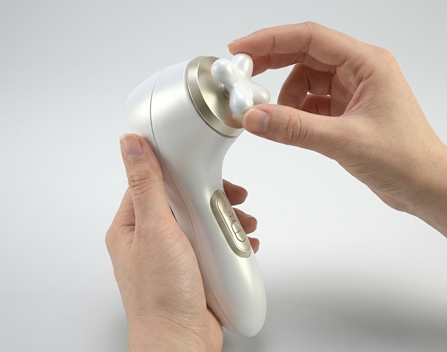
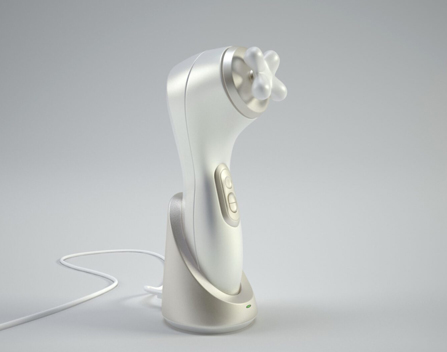
Glowify is a compact skincare appliance designed for fast, targeted home routines—combining massage, cleansing, and revitalization through a set of interchangeable attachments. The key shift is its connection to a mobile device: functions and settings move into an intuitive digital layer, reducing friction and avoiding the usual complexity of multi-function devices. Formally, the product stays minimalist and ergonomic, with a comfortable grip and straightforward handling, finished in a pearlescent body with gold accents that signal a quiet sense of luxury.
Within ZMIANY, Glowify frames change as a redesign of everyday care, where technology simplifies the ritual, adapts to individual needs and turns personal maintenance into a more fluid, user-led experience.
Glowify
Adéla Jakubeková
Glowify is a compact skincare appliance designed for fast, targeted home routines—combining massage, cleansing, and revitalization through a set of interchangeable attachments. The key shift is its connection to a mobile device: functions and settings move into an intuitive digital layer, reducing friction and avoiding the usual complexity of multi-function devices. Formally, the product stays minimalist and ergonomic, with a comfortable grip and straightforward handling, finished in a pearlescent body with gold accents that signal a quiet sense of luxury.
Within ZMIANY, Glowify frames change as a redesign of everyday care, where technology simplifies the ritual, adapts to individual needs and turns personal maintenance into a more fluid, user-led experience.
Cinque
Marek Ondřej
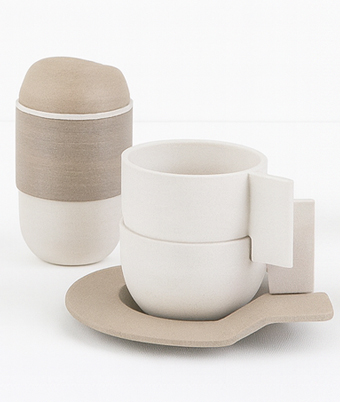
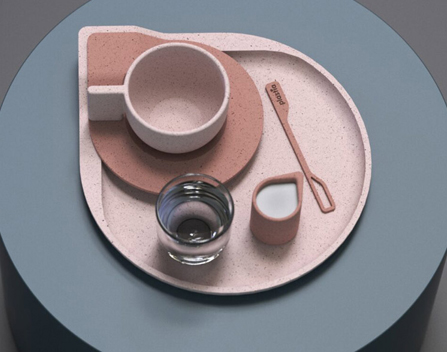
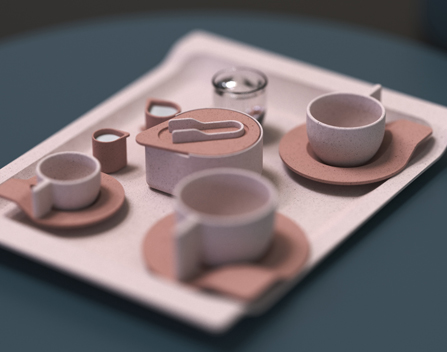
Cinque proposes a coffee set made from polymer infused with spent coffee grounds—turning an everyday residue into the material core of a domestic ritual. The collection includes three cup sizes with saucers, a universal tray, sugar bowl, milk jug, stirrer, and a to-go cup. It is designed for contexts where porcelain sets are uncommon, offering a durable alternative that can reduce reliance on disposable cups.
Developed in close collaboration with Plastia s.r.o., the project became part of the collective research initiative Kafelímek, which investigates coffee grounds as an industrial design material. Cinque reframes waste as a resource while linking sustainability to tactile presence, aesthetics, and practical use. Within ZMIANY, it defines change as a circular revaluation: what is thrown away returns as an everyday object, shifting coffee culture from consumption toward continuity.
Cinque
Marek Ondřej
Cinque proposes a coffee set made from polymer infused with spent coffee grounds—turning an everyday residue into the material core of a domestic ritual. The collection includes three cup sizes with saucers, a universal tray, sugar bowl, milk jug, stirrer, and a to-go cup. It is designed for contexts where porcelain sets are uncommon, offering a durable alternative that can reduce reliance on disposable cups.
Developed in close collaboration with Plastia s.r.o., the project became part of the collective research initiative Kafelímek, which investigates coffee grounds as an industrial design material. Cinque reframes waste as a resource while linking sustainability to tactile presence, aesthetics, and practical use. Within ZMIANY, it defines change as a circular revaluation: what is thrown away returns as an everyday object, shifting coffee culture from consumption toward continuity.
Pneudome
Vladimír Vykoukal
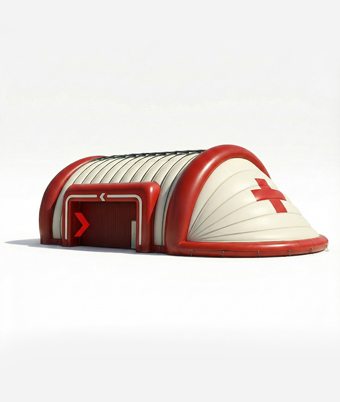
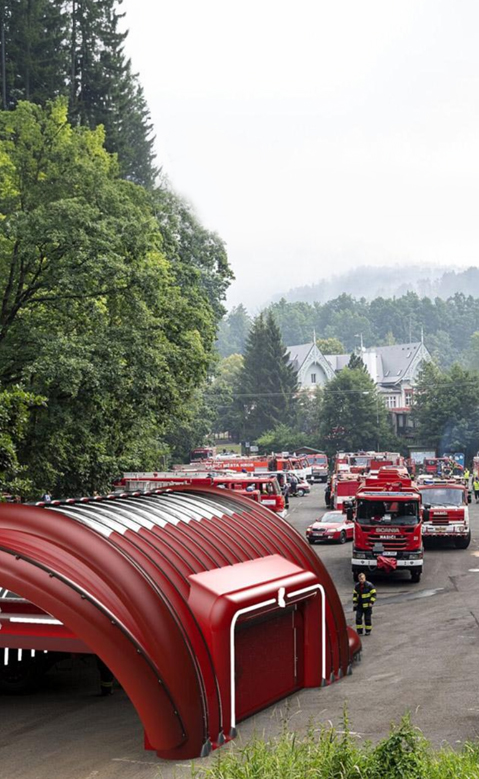
PneuDome explores an inflatable multifunctional hall made from polymer and composite materials. Designed as a complete system, it integrates structure with electricity generation, air handling, self-sufficiency, and water collection and filtration—positioning pneumatic architecture as a flexible form of infrastructure.
The project shifts architecture toward temporary, adaptable spaces that can respond to environmental and social pressure, supporting sport, culture, or emergency needs without permanent construction. Within ZMIANY, it frames change as a move from permanence to responsiveness—buildings imagined less as monuments and more as living systems that transform with conditions.
Pneudome
Vladimír Vykoukal
PneuDome explores an inflatable multifunctional hall made from polymer and composite materials. Designed as a complete system, it integrates structure with electricity generation, air handling, self-sufficiency, and water collection and filtration—positioning pneumatic architecture as a flexible form of infrastructure.
The project shifts architecture toward temporary, adaptable spaces that can respond to environmental and social pressure, supporting sport, culture, or emergency needs without permanent construction. Within ZMIANY, it frames change as a move from permanence to responsiveness—buildings imagined less as monuments and more as living systems that transform with conditions.
Acoustic panel
Veronika Plevová
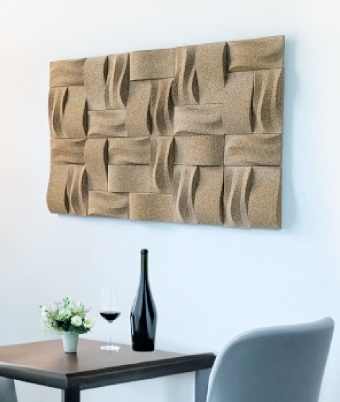
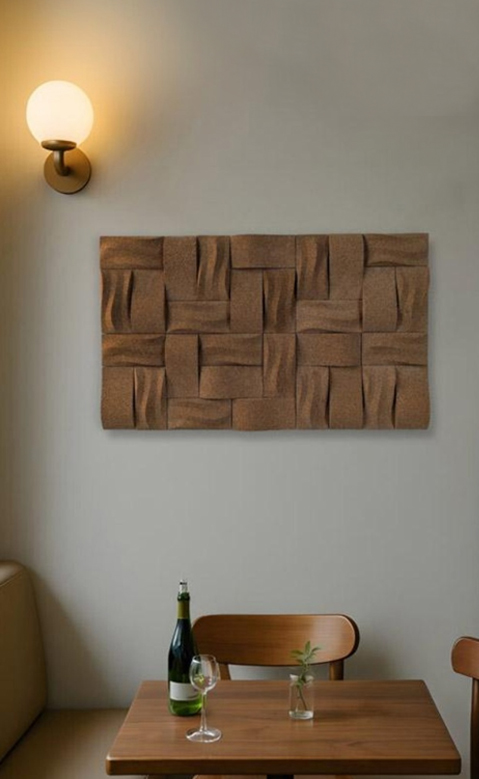
This bachelor’s thesis explores recycled cork stoppers as the basis for a modular acoustic artwork. Inspired by the author’s personal relationship to cork and an Erasmus stay in Portugal, the project highlights the material’s renewability, lightness, and distinctive texture—transforming what is typically discarded after opening a bottle into a functional interior element.
The final work is a variable composition of 30 panels with an organic relief that diffuses sound and plays with light and shadow, while subtly referencing the wine slopes of South Moravia. In a symbolic closure of the cycle, cork returns to wine bars and restaurants not as waste, but as a durable acoustic object. Within ZMIANY, the artwork frames change as circular return: residue becomes atmosphere, and recycling becomes both environmental responsibility and a new language for interior acoustics.
Acoustic panel
Veronika Plevová
This bachelor’s thesis explores recycled cork stoppers as the basis for a modular acoustic artwork. Inspired by the author’s personal relationship to cork and an Erasmus stay in Portugal, the project highlights the material’s renewability, lightness, and distinctive texture—transforming what is typically discarded after opening a bottle into a functional interior element.
The final work is a variable composition of 30 panels with an organic relief that diffuses sound and plays with light and shadow, while subtly referencing the wine slopes of South Moravia. In a symbolic closure of the cycle, cork returns to wine bars and restaurants not as waste, but as a durable acoustic object. Within ZMIANY, the artwork frames change as circular return: residue becomes atmosphere, and recycling becomes both environmental responsibility and a new language for interior acoustics.
Modair - wall system
Anna Fischerová
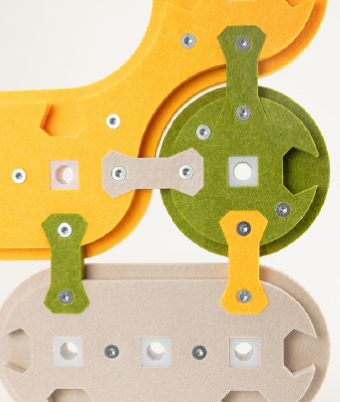
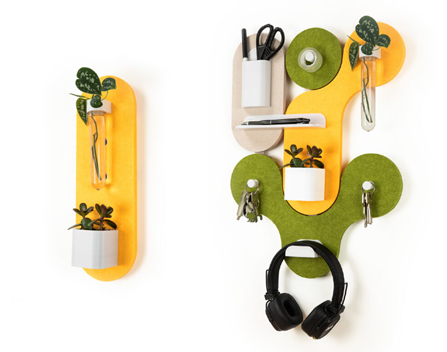
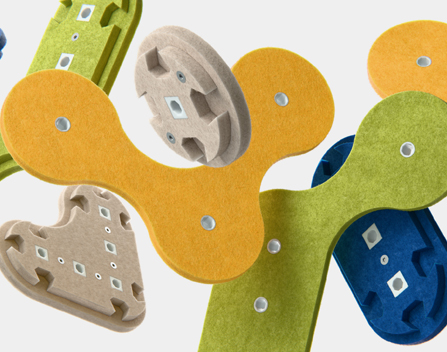
This master’s thesis introduces Modair, a modular wall system made from recycled PET felt, developed in collaboration with DeFelt. It enables flexible configurations of storage elements—coat rack, shelf, and storage box—while strengthening acoustic comfort and maintaining a calm, coherent visual language. Using 3D-printed connectors and minimalist fittings, the system can be assembled and disassembled cleanly, without permanent changes to the space.
Modair responds to contemporary interiors shaped by shifting routines—from home office needs to living across different life stages—where furniture must adapt rather than dictate. Within ZMIANY, it frames change as spatial elasticity: recycled material becomes a quiet infrastructure that turns static walls into responsive, reconfigurable environments.
Modair - wall system
Anna Fischerová
This master’s thesis introduces Modair, a modular wall system made from recycled PET felt, developed in collaboration with DeFelt. It enables flexible configurations of storage elements—coat rack, shelf, and storage box—while strengthening acoustic comfort and maintaining a calm, coherent visual language. Using 3D-printed connectors and minimalist fittings, the system can be assembled and disassembled cleanly, without permanent changes to the space.
Modair responds to contemporary interiors shaped by shifting routines—from home office needs to living across different life stages—where furniture must adapt rather than dictate. Within ZMIANY, it frames change as spatial elasticity: recycled material becomes a quiet infrastructure that turns static walls into responsive, reconfigurable environments.
Place, Time, Home
Kristýna Kroulová
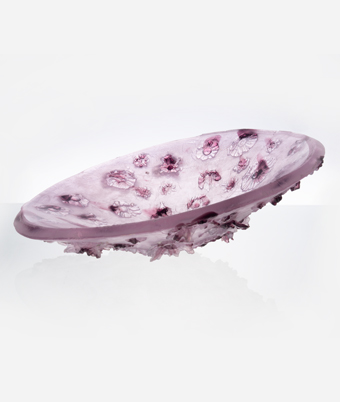
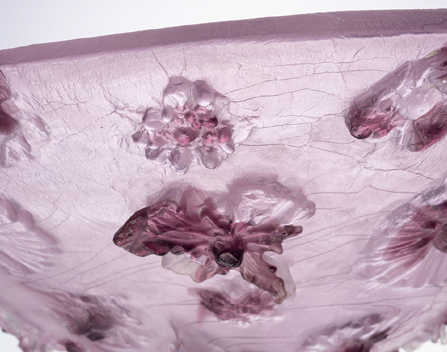
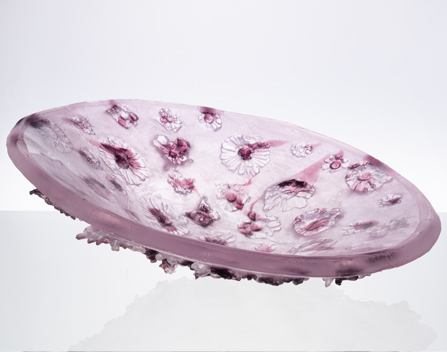
This bachelor’s thesis grows out of a lived practice: cultivating, harvesting, processing, and using medicinal herbs from a family garden, shaped by knowledge passed down from the author’s mother. Rather than designing a utilitarian product, the work translates this intimate “herbal philosophy” into an object rooted in ritual—reminding us that plants can still soothe minor illnesses and enrich everyday cooking in ways our ancestors understood. The practical outcome centers on a glass object—conceived as a vessel—where botanical forms are preserved and reinterpreted through making, turning garden matter into a tactile record of care, time, and place. Within ZMIANY, the work frames change as a cycle of transmission and return: knowledge moves from mother to daughter, herbs move from soil to object, and the home becomes a space where nature is continuously re-authored into memory.
Place, Time, Home
Kristýna Kroulová
This bachelor’s thesis grows out of a lived practice: cultivating, harvesting, processing, and using medicinal herbs from a family garden, shaped by knowledge passed down from the author’s mother. Rather than designing a utilitarian product, the work translates this intimate “herbal philosophy” into an object rooted in ritual—reminding us that plants can still soothe minor illnesses and enrich everyday cooking in ways our ancestors understood. The practical outcome centers on a glass object—conceived as a vessel—where botanical forms are preserved and reinterpreted through making, turning garden matter into a tactile record of care, time, and place. Within ZMIANY, the work frames change as a cycle of transmission and return: knowledge moves from mother to daughter, herbs move from soil to object, and the home becomes a space where nature is continuously re-authored into memory.
Drop of Water
Jana Ermisová
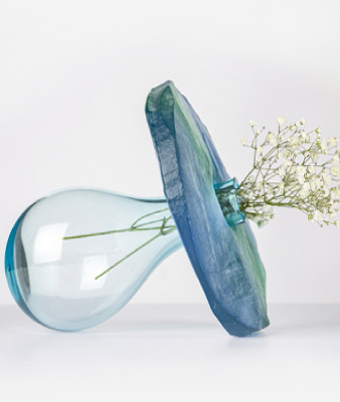
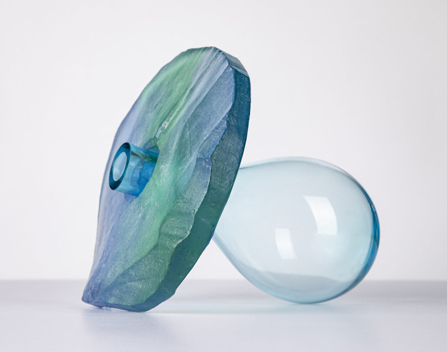
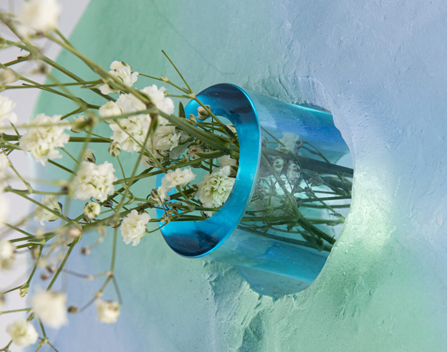
The Drop of Water collection draws inspiration from raindrops—their color, form, and the quiet dynamics of the moment they meet the ground. A blown-glass vase is paired with a supporting glass sculpture, creating a composition that feels both fluid and distinctly structured. Its subtle coloration and organically modeled surfaces recall stone formations, as if water had briefly borrowed the language of mineral matter.
The work translates an ephemeral natural event into a lasting object, capturing the threshold where a fleeting drop becomes form. Within ZMIANY, Drop of Water frames change as a crystallized instant: the passage from motion to permanence, where nature’s transience is held and made tangible through glass.
Drop of Water
Jana Ermisová
The Drop of Water collection draws inspiration from raindrops—their color, form, and the quiet dynamics of the moment they meet the ground. A blown-glass vase is paired with a supporting glass sculpture, creating a composition that feels both fluid and distinctly structured. Its subtle coloration and organically modeled surfaces recall stone formations, as if water had briefly borrowed the language of mineral matter.
The work translates an ephemeral natural event into a lasting object, capturing the threshold where a fleeting drop becomes form. Within ZMIANY, Drop of Water frames change as a crystallized instant: the passage from motion to permanence, where nature’s transience is held and made tangible through glass.
Erith
Nela Navrátilová
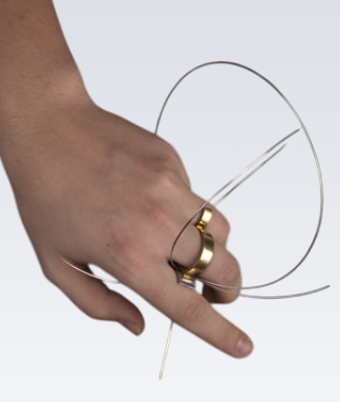
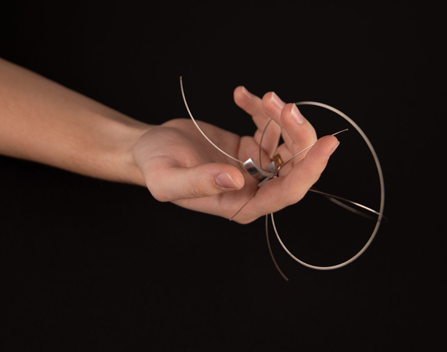
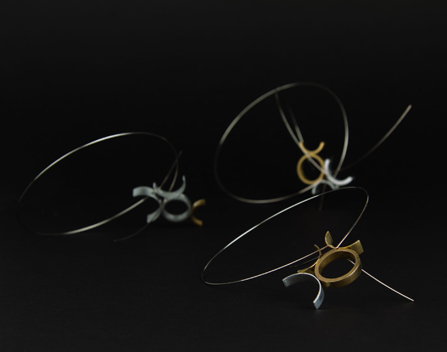
Developed within Less is More a faculty-wide FMC TBU initiative presented internationally—the project works with waste material from the metalworking industry. Aluminum and brass tubes are refined by hand through cutting, grinding, and polishing, then assembled with handmade rivets formed from recycled metal scraps.
The result is a set of three pieces—a brooch, bracelet, and ring—designed as multifunctional objects whose final configuration is completed by the wearer. Material and technique take priority over conventional jewelry “utility,” placing the work between ornament and small-scale sculpture.
By elevating industrial remnants into wearable objects with aesthetic presence, the project blurs the line between material research and personal adornment. Within ZMIANY, it frames change as re-authorship: discarded industry becomes intimate artefact, and the wearer becomes a co-designer of form.
Erith
Nela Navrátilová
Developed within Less is More a faculty-wide FMC TBU initiative presented internationally—the project works with waste material from the metalworking industry. Aluminum and brass tubes are refined by hand through cutting, grinding, and polishing, then assembled with handmade rivets formed from recycled metal scraps.
The result is a set of three pieces—a brooch, bracelet, and ring—designed as multifunctional objects whose final configuration is completed by the wearer. Material and technique take priority over conventional jewelry “utility,” placing the work between ornament and small-scale sculpture.
By elevating industrial remnants into wearable objects with aesthetic presence, the project blurs the line between material research and personal adornment. Within ZMIANY, it frames change as re-authorship: discarded industry becomes intimate artefact, and the wearer becomes a co-designer of form.
Genesis
Zuzana Cholevová
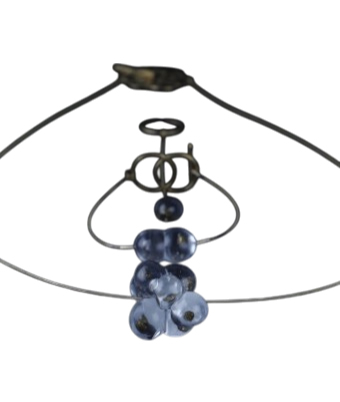
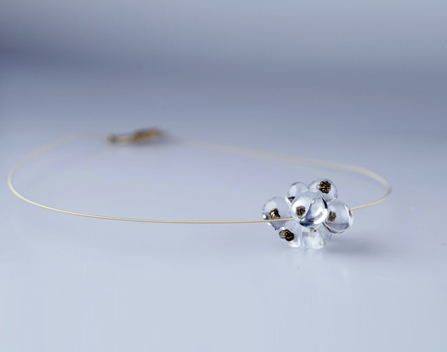
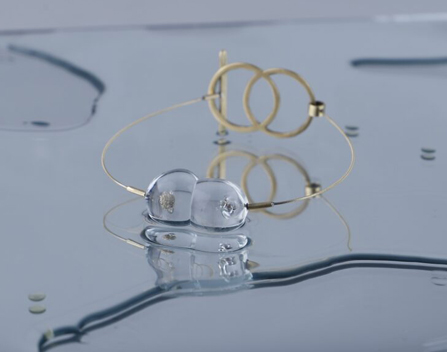
The Genesis jewelry collection draws on the symbolism of life’s beginnings. Its core motif is a series of glass beads with brass cores—cells imagined in stages of growth, from the single origin through division toward more complex forms. Using the circle and sphere as its primary language, the work evokes wholeness, cyclicality, and interconnectedness.
Developed within the Less is More initiative, the collection—earrings, bracelet, and necklace—pairs minimalist form with archetypal references such as vesica piscis and the seed of life, linking adornment to fertility, creation, and protection. Within ZMIANY, Genesis frames change as unfolding: the first movement of life translated into wearable form, where transformation is reduced to its most essential signs.
Genesis
Zuzana Cholevová
The Genesis jewelry collection draws on the symbolism of life’s beginnings. Its core motif is a series of glass beads with brass cores—cells imagined in stages of growth, from the single origin through division toward more complex forms. Using the circle and sphere as its primary language, the work evokes wholeness, cyclicality, and interconnectedness.
Developed within the Less is More initiative, the collection—earrings, bracelet, and necklace—pairs minimalist form with archetypal references such as vesica piscis and the seed of life, linking adornment to fertility, creation, and protection. Within ZMIANY, Genesis frames change as unfolding: the first movement of life translated into wearable form, where transformation is reduced to its most essential signs.
Mask of the 21st Century
Jolana Horynová
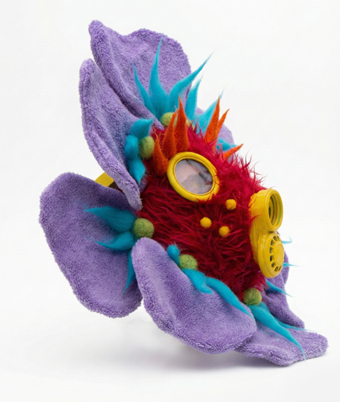
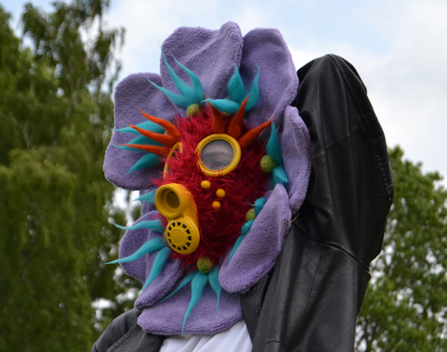
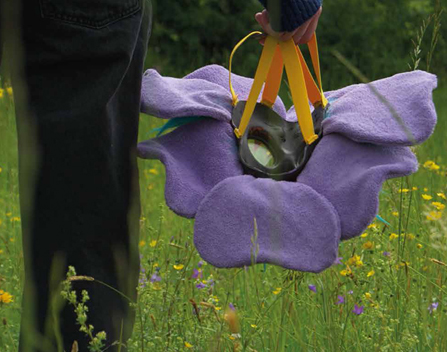
Mask of the 21st Century reinterprets the gas mask as a symbol of contemporary threats—war, ecological destruction, toxic environments, and social crisis—then flips its meaning by transforming it into a flower, a sign of nature, regeneration, beauty, and peace. The result is a satirical “weapon”: soft and playful on the surface, yet unsettling in its message, refusing to protect by hiding reality and instead confronting it through ridicule and re-framing.
Wrapped in furry plush and enriched with stitched petals and felt details, the mask becomes a wearable ritual object that turns dystopia into poetic commentary. It also expands jewelry beyond decoration, proposing adornment as a critical voice. Within ZMIANY, the work frames change as symbolic reversal: fear is translated into humor, and a tool of survival becomes an instrument of cultural resistance.
Mask of the 21st Century
Jolana Horynová
Mask of the 21st Century reinterprets the gas mask as a symbol of contemporary threats—war, ecological destruction, toxic environments, and social crisis—then flips its meaning by transforming it into a flower, a sign of nature, regeneration, beauty, and peace. The result is a satirical “weapon”: soft and playful on the surface, yet unsettling in its message, refusing to protect by hiding reality and instead confronting it through ridicule and re-framing.
Wrapped in furry plush and enriched with stitched petals and felt details, the mask becomes a wearable ritual object that turns dystopia into poetic commentary. It also expands jewelry beyond decoration, proposing adornment as a critical voice. Within ZMIANY, the work frames change as symbolic reversal: fear is translated into humor, and a tool of survival becomes an instrument of cultural resistance.
Hallux Valgus
Michaela Koreňová
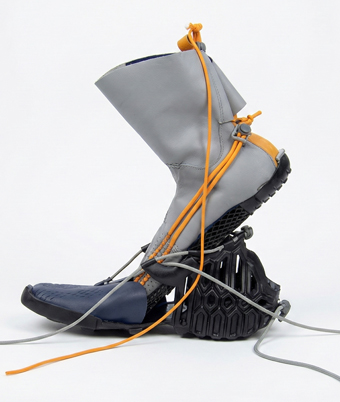
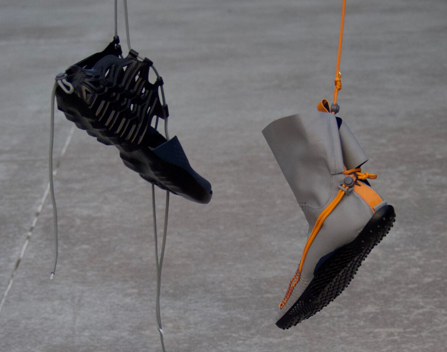
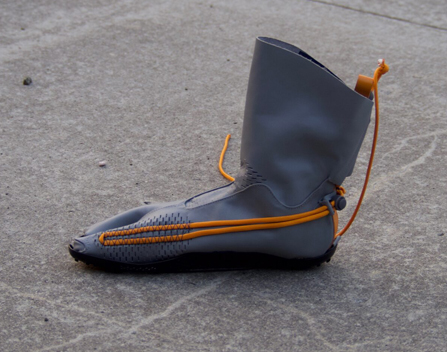
This master’s thesis examines hallux valgus and its impact on physical and psychological wellbeing—especially for women. Based on research, existing studies, and consultations with a physiotherapist, it maps the condition from causes and stages to everyday consequences, while questioning how cultural ideas of “beauty” shape the perception of deformity.
The project confronts stereotypes with medical realities and explores the relationship between aesthetics, function, and health in footwear. Its practical outcome is an authorial capsule collection of shoes and accessories, developed through prototyping to suit individual anatomical needs while remaining visually acceptable, and to raise public awareness of prevention and support. Within ZMIANY, it frames change as a shift in standards: from cosmetic norms toward inclusive footwear that respects both the body and design.
Hallux Valgus
Michaela Koreňová
This master’s thesis examines hallux valgus and its impact on physical and psychological wellbeing—especially for women. Based on research, existing studies, and consultations with a physiotherapist, it maps the condition from causes and stages to everyday consequences, while questioning how cultural ideas of “beauty” shape the perception of deformity.
The project confronts stereotypes with medical realities and explores the relationship between aesthetics, function, and health in footwear. Its practical outcome is an authorial capsule collection of shoes and accessories, developed through prototyping to suit individual anatomical needs while remaining visually acceptable, and to raise public awareness of prevention and support. Within ZMIANY, it frames change as a shift in standards: from cosmetic norms toward inclusive footwear that respects both the body and design.
In the Eyes pf AI
Viktória Kolesárová
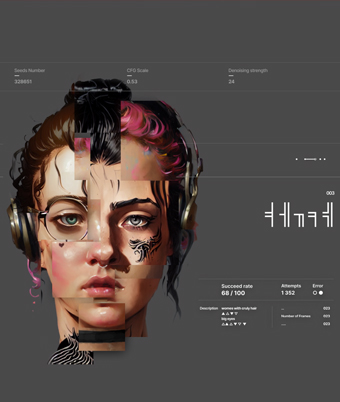
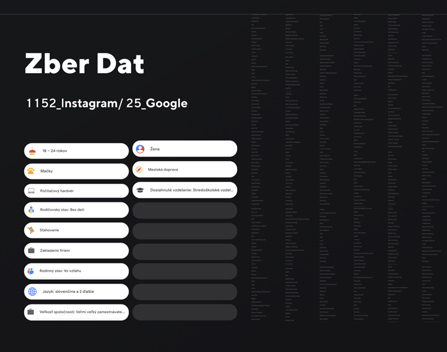
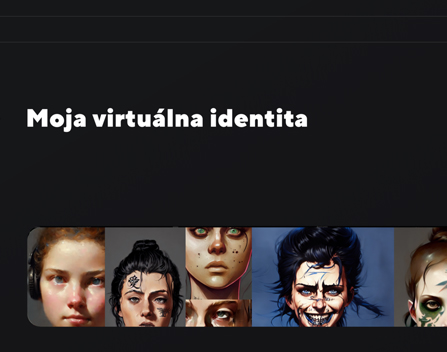
In the Eyes of AI explores artificial intelligence through visually rich digital design. Using generative tools and AI algorithms, the author creates variable portraits and digital identities that test how machines “read” the human form—moving beyond conventional likeness to speculate on how AI may reshape our sense of self.
Developed within the faculty-wide assignment Identity and presented in an international context (including Milan Design Week), the project becomes part of a wider conversation about technology and individuality. It shifts portraiture from passive representation into an active human–machine dialogue, while foregrounding ethical questions of authorship and creative responsibility when algorithms co-produce the work. Within ZMIANY, it frames change as a transformation of identity itself: from something we present, to something continuously re-generated, negotiated, and questioned through machine vision.
In the Eyes pf AI
Viktória Kolesárová
In the Eyes of AI explores artificial intelligence through visually rich digital design. Using generative tools and AI algorithms, the author creates variable portraits and digital identities that test how machines “read” the human form—moving beyond conventional likeness to speculate on how AI may reshape our sense of self.
Developed within the faculty-wide assignment Identity and presented in an international context (including Milan Design Week), the project becomes part of a wider conversation about technology and individuality. It shifts portraiture from passive representation into an active human–machine dialogue, while foregrounding ethical questions of authorship and creative responsibility when algorithms co-produce the work. Within ZMIANY, it frames change as a transformation of identity itself: from something we present, to something continuously re-generated, negotiated, and questioned through machine vision.


Genomancer
Lukáš Demovič
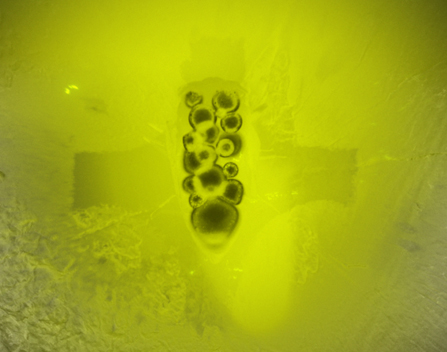
Genomancer is a short 3D motion experiment created as the outcome of the sprint Submission for Pause Originals. Through digital animation, it reflects on genetic identity in a moment when science and technology begin to challenge the idea of biology as a fixed boundary. Rather than illustrating a concrete future, the work operates as a speculative prompt—inviting debate about where artificially initiated evolution might lead.
By treating biological structures as mutable and reconfigurable, Genomancer shifts identity from something inherited to something imagined, edited, and potentially engineered. Within ZMIANY, it frames change as speculative evolution: a transition from stable human development toward an open, uncertain field where technology rewrites what “life” can become.
Genomancer
Lukáš Demovič
Genomancer is a short 3D motion experiment created as the outcome of the sprint Submission for Pause Originals. Through digital animation, it reflects on genetic identity in a moment when science and technology begin to challenge the idea of biology as a fixed boundary. Rather than illustrating a concrete future, the work operates as a speculative prompt—inviting debate about where artificially initiated evolution might lead.
By treating biological structures as mutable and reconfigurable, Genomancer shifts identity from something inherited to something imagined, edited, and potentially engineered. Within ZMIANY, it frames change as speculative evolution: a transition from stable human development toward an open, uncertain field where technology rewrites what “life” can become.

Éclaire
Tereza Prudilová
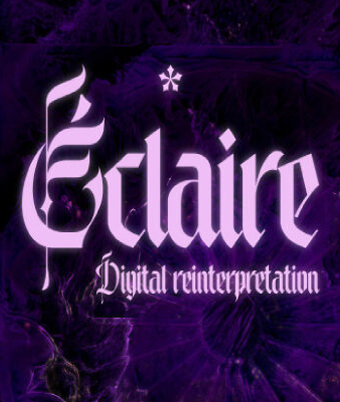
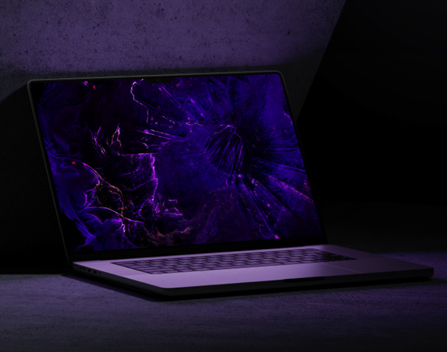
Éclaire is an interactive digital project that revisits Gothic art through the lens of contemporary design tools. Working with the motif of stained glass and the light that passes through it, the author creates luminous visuals intended to evoke contemplation and moments of transcendental calm. The title—French for “it shines / it illuminates”—signals both the central effect and the project’s inspiration in France, particularly Sainte-Chapelle as a point of departure for the visual language.
Developed in TouchDesigner using particle systems, Éclaire generates a different outcome each time, responding directly to viewer interaction. By translating Gothic symbolism of light into a living digital environment, the work turns a historical aesthetic into an experience that unfolds in the present. Within ZMIANY, it frames change as a passage between eras: sacred light rewritten as interactive code, where the past is not preserved—but activated.
Éclaire
Tereza Prudilová
Éclaire is an interactive digital project that revisits Gothic art through the lens of contemporary design tools. Working with the motif of stained glass and the light that passes through it, the author creates luminous visuals intended to evoke contemplation and moments of transcendental calm. The title—French for “it shines / it illuminates”—signals both the central effect and the project’s inspiration in France, particularly Sainte-Chapelle as a point of departure for the visual language.
Developed in TouchDesigner using particle systems, Éclaire generates a different outcome each time, responding directly to viewer interaction. By translating Gothic symbolism of light into a living digital environment, the work turns a historical aesthetic into an experience that unfolds in the present. Within ZMIANY, it frames change as a passage between eras: sacred light rewritten as interactive code, where the past is not preserved—but activated.
Ayra OS
Matyáš Sochor
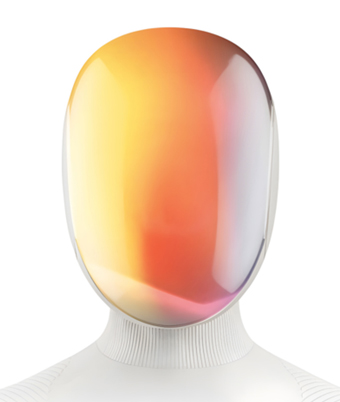
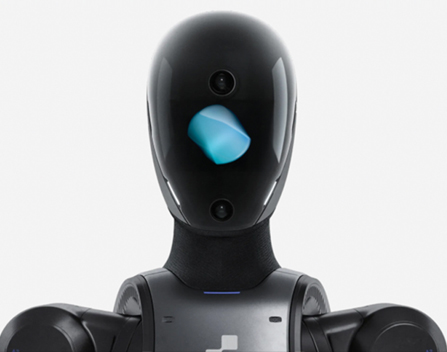
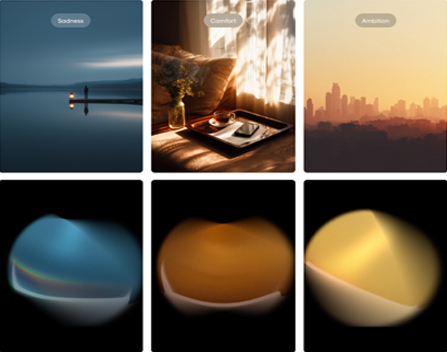
Ayra OS is a conceptual operating system that gives robots an emotional presence not by mimicking human faces, but through abstract visual atmospheres. Built as a modular visual identity with dynamic states and user-driven personalization, it translates atmospheric photography into evolving abstractions that retain the emotional charge of the original image.
The project shifts the role of an operating system from a purely technical interface into an affective layer—one that can respond, soothe, and shape the tone of interaction between human and machine. It also asks how design might mediate emotional relationships with intelligent systems, turning inner states into a readable visual environment. Within ZMIANY, Ayra OS frames change as an interface shift: from command-and-control to emotional attunement, where technology becomes less a tool and more a companionable atmosphere.
Ayra OS
Matyáš Sochor
Ayra OS is a conceptual operating system that gives robots an emotional presence—not by mimicking human faces, but through abstract visual atmospheres. Built as a modular visual identity with dynamic states and user-driven personalization, it translates atmospheric photography into evolving abstractions that retain the emotional charge of the original image.
The project shifts the role of an operating system from a purely technical interface into an affective layer—one that can respond, soothe, and shape the tone of interaction between human and machine. It also asks how design might mediate emotional relationships with intelligent systems, turning inner states into a readable visual environment. Within ZMIANY, Ayra OS frames change as an interface shift: from command-and-control to emotional attunement, where technology becomes less a tool and more a companionable atmosphere.
Design of Railways
Dalibor Itze
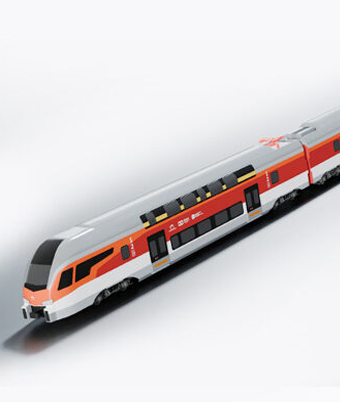
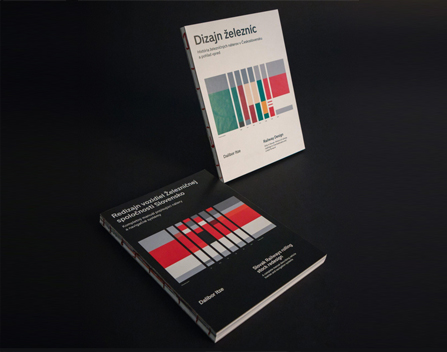
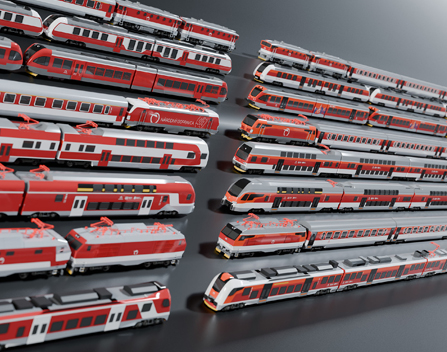
Railway Design traces the history of Slovak train liveries since 1945 and turns this research into a renewed visual identity for ŽSSK. The outcome, published as Redesign of ŽSSK Vehicles, proposes updated color schemes, a navigation system, and pictograms for train interiors and exteriors.
The system builds on Daniel Blonski’s 2008 design, adding a grey–orange stripe and a bold black “Boomerang” element on the driver’s cab to strengthen flexibility and recognition across different vehicle types. An interactive web app, railwaydesign.xyz, lets the public assemble trains in the new look. Within ZMIANY, the project frames change as public clarity: design as a quiet upgrade that reshapes how people read, trust, and experience everyday transport.
Design of Railways
Dalibor Itze
Railway Design traces the history of Slovak train liveries since 1945 and turns this research into a renewed visual identity for ŽSSK. The outcome, published as Redesign of ŽSSK Vehicles, proposes updated color schemes, a navigation system, and pictograms for train interiors and exteriors.
The system builds on Daniel Blonski’s 2008 design, adding a grey–orange stripe and a bold black “Boomerang” element on the driver’s cab to strengthen flexibility and recognition across different vehicle types. An interactive web app, railwaydesign.xyz, lets the public assemble trains in the new look. Within ZMIANY, the project frames change as public clarity: design as a quiet upgrade that reshapes how people read, trust, and experience everyday transport.
Sound Forms
Filip Skácel
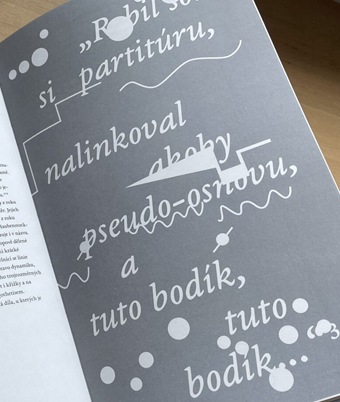
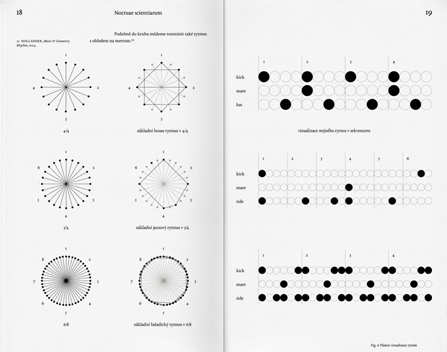
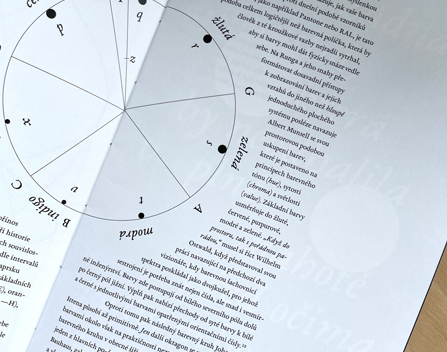
Sound Forms traces historical attempts to visualize sound from Aristotle and Chladni’s sound figures to Kandinsky, Pešánek’s color piano, and contemporary digital scores. In its final section, the book proposes a typology of shapes and graphemes used in sound visualization, linking them to specific authors, works, and periods.
By translating an immaterial, fleeting phenomenon into a readable graphic language, the publication shows how design can make sound both analyzable and aesthetically engaging. It also opens a wider inquiry into the ties between music, image, and language where visualization operates not only as analysis, but as poetic interpretation. Within ZMIANY, Sound Forms frames change as translation: sound shifts into image, and perception becomes a visual system we can read, compare, and reinvent.
Sound Forms
Filip Skácel
Sound Forms traces historical attempts to visualize sound from Aristotle and Chladni’s sound figures to Kandinsky, Pešánek’s color piano, and contemporary digital scores. In its final section, the book proposes a typology of shapes and graphemes used in sound visualization, linking them to specific authors, works, and periods.
By translating an immaterial, fleeting phenomenon into a readable graphic language, the publication shows how design can make sound both analyzable and aesthetically engaging. It also opens a wider inquiry into the ties between music, image, and language where visualization operates not only as analysis, but as poetic interpretation. Within ZMIANY, Sound Forms frames change as translation: sound shifts into image, and perception becomes a visual system we can read, compare, and reinvent.
mAI type
Collective of Authors
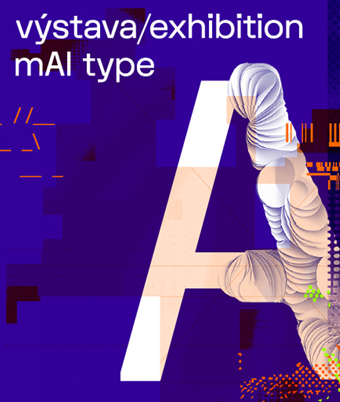
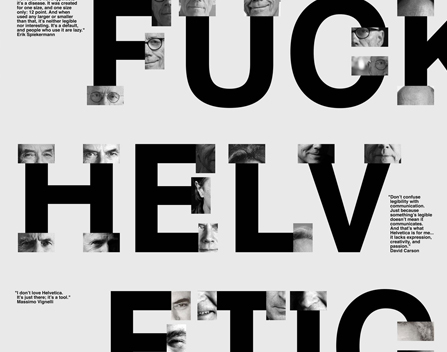
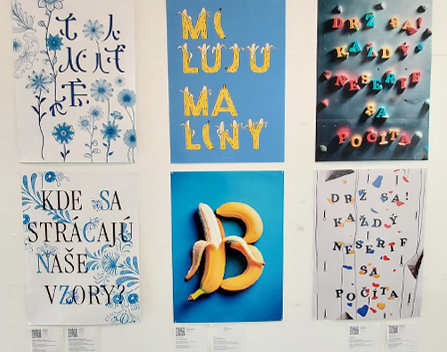
mAI type explores how generative tools can reshape type design and expand the vocabulary of graphic design. Students experimented with workflows that were unthinkable until recently—from generating single letters and words, through building entire alphabets, to fine-grained variations of detail. In this process, AI becomes a kind of co-pilot: accelerating ideation and exploration, yet still requiring human judgement, editing, and authorship.
Presented within the SHIFT exhibition context (and later shown internationally at ATypI in Copenhagen after its first presentation at Gallery G18 in Zlín), the project frames typography as a practice in transition where tools don’t just execute, but actively influence visual thinking. Within ZMIANY, mAI type defines change as a shift in craft itself: from drawing letters by hand to negotiating form with an algorithm, and re-learning what it means to “design” when the medium can propose.
Project web: maitype.fmk.utb.cz
mAI type
Collective of Authors
mAI type explores how generative tools can reshape type design and expand the vocabulary of graphic design. Students experimented with workflows that were unthinkable until recently—from generating single letters and words, through building entire alphabets, to fine-grained variations of detail. In this process, AI becomes a kind of co-pilot: accelerating ideation and exploration, yet still requiring human judgement, editing, and authorship.
Presented within the SHIFT exhibition context (and later shown internationally at ATypI in Copenhagen after its first presentation at Gallery G18 in Zlín), the project frames typography as a practice in transition where tools don’t just execute, but actively influence visual thinking. Within ZMIANY, mAI type defines change as a shift in craft itself: from drawing letters by hand to negotiating form with an algorithm, and re-learning what it means to “design” when the medium can propose.
Project web: maitype.fmk.utb.cz
ModificAI | AI research
Collective of Authors
CREDITS / TEAM
Faculty of Multimedia Communications, Tomas Bata University in Zlín · Bratislava Design Week 2025
Project Author
Curator
Heads of Studios
Exhibiting Authors
Studio of Industrial Design
- Štěpán Dlabaja
- Martina Hrnčiříková
- Adéla Jakúbeková
- Adam Keprta
- Bára Kolondrová
- Jan Kroulík
- Marek Ondřej
- Jiří Šprtel
- Valeriya Truskavetska
- Vladimír Vykoukal
Studio of Product Design
- Veronika Plevová
- Anna Fischerová
Studio of Jewelry Design
- Jolana Horynová
- Zuzana Cholevová
- Nela Navrátilová
Studio of Glass
- Jana Ermisová
- Kristýna Kroulová
Studio of Digital Design
- Lukáš Demovič
- Viktória Kolesárová
- Tereza Prudilová
- Matyáš Sochor
Studio of Graphic Design
- Dalibor Itze
- Johana Hýžová
- Veronika Roubalová
- Filip Skácel
Studio of Shoe design
- Michaela Koreňová
About FMC TBU in Zlín
The Faculty of Multimedia Communications at Tomas Bata University in Zlín is a vibrant, interdisciplinary environment that brings together creative design, digital media,
and technological innovation. Through carefully guided studios and research laboratories,
FMC fosters experimental approaches to visual communication, user-centered design, and digital storytelling. By combining academic rigor with cultural and industrial collaboration, the Faculty enriches projects such as SHIFT, where originality, social relevance, and a forward-looking vision come to life.

The transformations and connections opened up by the ZMIANY project are further explored on the Showcase of the Faculty of Multimedia Communications.
This online space presents a wide range of student projects — from design and visual communication to film, marketing, and digital experiments. The Showcase complements the exhibition by offering a comprehensive view of the creative innovations emerging at the faculty.